Converting a building into a hotel in Alicante: permits
Permits to convert a building into a hotel in Alicante: the order, documents and legal deadlines for planning, environmental, tourism and ICIO.
· 12 min read · Teciforp
To convert a building into a hotel in Alicante you need four permits, and the order matters. First, the municipal planning report (informe urbanístico municipal), which confirms that hotel use is allowed on that plot. Second, the planning permit for the works and the change of use (cambio de uso). Third, the environmental permit for the activity: an environmental licence (licencia ambiental) if the hotel exceeds 1,500 m² of built floor area or an evacuation height of 28 metres, and an environmental responsible declaration (declaración responsable ambiental) if it does not. Finally, a responsible declaration filed with Turisme Comunitat Valenciana, the regional tourism authority, which registers the establishment. A responsible declaration (declaración responsable) is a sworn statement that lets you proceed without waiting for a decision, subject to later inspection. On paper, the authorities have between one and six months for each step. In practice, the project and the permits usually take about a year before works can start.
Two caveats. This article reflects the rules in force on 15 November 2026. And it is general information, not legal advice: the exact permit your building needs depends on the building itself, and the Ayuntamiento (city council) confirms it.
What permits you need to convert a building into a hotel
| Step | Rule | Filed with | Legal deadline | If there is no answer |
|---|---|---|---|---|
| Municipal planning report (compatibility of the use) | Ley 6/2014, art. 22 | Ayuntamiento | 1 month | You can carry on by stating the date you applied (art. 22.5); a negative report is binding |
| Building licence with change of use | TRLOTUP, arts. 232 and 240 | Ayuntamiento | 2 months; 3 if the building is listed | As a rule, silence means refusal (art. 242) |
| Environmental licence (hotel > 1,500 m² or evacuation height > 28 m) | Ley 6/2014, annex II, 13.2.7 and art. 60 | Ayuntamiento | 6 months | The Constitutional Court struck down the clause on silence (STC 76/2022): do not rely on it |
| Environmental responsible declaration (hotel below those thresholds) | Ley 6/2014, arts. 68 and 69 | Ayuntamiento | You may open after one month if there are no objections | Silence lets you proceed |
| Notice of start of operation (if an environmental licence was granted) | Ley 6/2014, art. 61 | Ayuntamiento | 1 month for the inspection visit | You may start the activity |
| Responsible declaration of start of tourism activity | Decreto 10/2021, arts. 21, 22 and 25 | Turisme Comunitat Valenciana | Registered automatically | You must open within 2 months |
Alicante City Council handles the planning and environmental side. The regional government (Generalitat) only comes in at the end, to classify the hotel and enter it in the Tourism Register (Registro de Turismo).
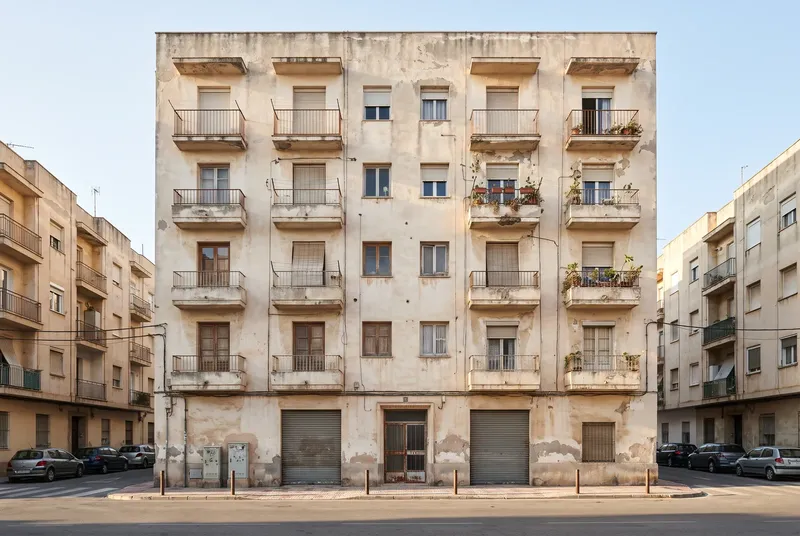
Licence or responsible declaration? How the change of use is processed
The Valencian planning law, the consolidated text of the LOTUP (TRLOTUP), offers two routes. Since 2023 its article 233.2 allows a change of use and works affecting a building's structure to go through a responsible declaration, provided it comes with a certificate from an administrative certification body or a professional association registered as a collaborating entity (entidad colaboradora, ECUV). A full licence is still required for new-build works, which includes adding storeys, and for works of heritage significance on listed buildings (art. 232).
In Alicante, the municipal licensing ordinance settles a practical point: the change-of-use licence is deemed included in the building or environmental licence for the project that contains the change (art. 26.2). Since almost no hotel conversion happens without works, the change of use normally travels inside that licence rather than as a separate file. If you choose the responsible declaration with an ECUV certificate, check first with the Ayuntamiento that it accepts this route for your case.
What the TRLOTUP sets for the licence:
- Deadlines (art. 240). Two months for major works and three for works on a building that is listed or being listed.
- A single request for corrections (art. 239.2). If the technical and legal reports find defects, the council notifies all of them at once and you have up to one month to fix them.
- Silence (art. 242). Except in cases the law lists, if the deadline passes without a decision, the licence is deemed refused. Do not count on silence to start work on a hotel.
When a hotel needs an environmental licence
The Ley 6/2014 on environmental prevention, quality and control of activities requires an environmental licence for hotels with an evacuation height above 28 metres or a total built area above 1,500 m² (annex II, section 13.2.7). It also requires one for activities involving a change of use in buildings listed as a Site of Cultural Interest (bien de interés cultural, BIC) or in the process of being listed (section 13.1.4). Below those limits, an environmental responsible declaration is generally enough.
| Building | Built area | Likely environmental route |
|---|---|---|
| Ground floor + 3 storeys of 300 m² | 1,200 m² | Environmental responsible declaration |
| Ground floor + 5 storeys of 280 m² | 1,680 m² | Environmental licence |
| Any size, listed as BIC, with change of use | — | Environmental licence |
The difference shows up in the timetable. The environmental licence has a maximum of six months (art. 60) and includes public consultation and notice to adjoining neighbours (art. 55). With the environmental responsible declaration you can open one month after filing it if the council raises no objections (art. 69).
Step by step: from building to tourism registration
- Preliminary checks. The plot's zoning in the General Plan (Plan General), whether the building appears in the Catálogo de Protecciones (the city's list of protected buildings), whether it falls within the coastal protection area, and which census section it belongs to. The census section matters because Alicante's forthcoming tourism rules cap tourist beds by neighbourhood; we explain this in our guide to opening a hotel in Alicante under the new rules.
- Municipal planning report. It is compulsory before any environmental procedure (art. 22 of Ley 6/2014; in Alicante it is issued as a certificate, under art. 5.5 of the ordinance). It needs a site plan, a description of the activity, and the land-use and utility requirements. The council has one month to issue it; if negative, it is binding, and if it is late, you can carry on by stating the date you applied. If you have not bought yet, make the purchase conditional on the result.
- Category and room programme. Decreto 10/2021 sets the requirements for each star category, and the category decides how many rooms fit. Settle it before the outline design, as part of the hotel feasibility study.
- Technical design. Changing a building's main use requires a full project under the Building Act (Ley de Ordenación de la Edificación, LOE, art. 2.2.b), and the Technical Building Code (Código Técnico de la Edificación, CTE) requires the building to meet its basic requirements for the new use (CTE, Part I, art. 2.6). The building project is joined by an activity project and an acoustic study (art. 53 of Ley 6/2014).
- Application. It is filed through the council's electronic register, together with the self-assessed fees.
- ICIO and tax relief. If you intend to claim relief on the construction tax, apply together with the licence and always before works begin (see below).
- Works. The full sequence is in the phases of a hotel construction project.
- Start of operation. With an environmental licence, you file the notice of start of operation with a technical certificate that what was built matches the approved project. The council has one month for an inspection visit (art. 61).
- Turisme. You file the responsible declaration of start of activity with the regional tourism office for Alicante. Turisme classifies the hotel and registers it automatically; from filing, you have two months to start operating (arts. 21 and 25 of Decreto 10/2021).
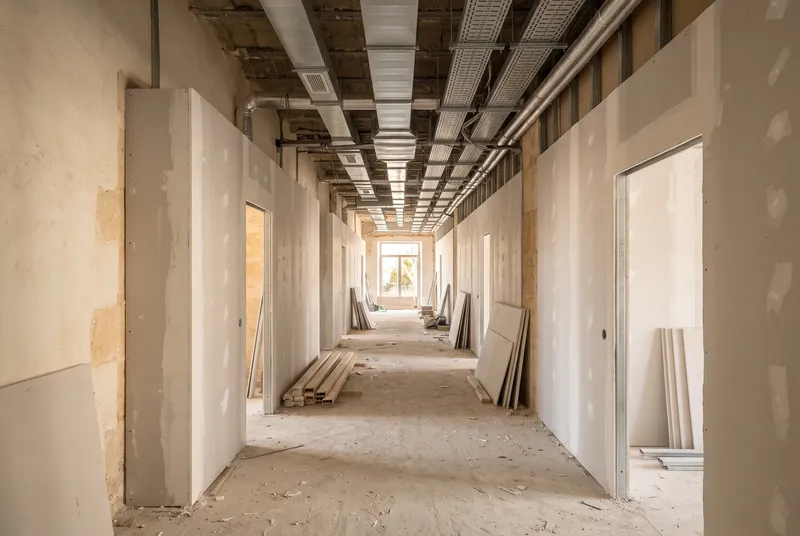
Documents: checklist
| Document | Prepared by | For which step |
|---|---|---|
| Site plan on the PGOU zoning map | Technical consultant | Planning report and licence |
| Description of the hotel activity | Technical consultant | Planning report |
| Basic and detailed design showing existing and proposed state | Architect | Building licence with change of use |
| CTE compliance for hotel use (Residencial Público): fire, accessibility, noise, health | Designer | Licence and Turisme declaration |
| Activity project and acoustic study | Engineer or architect | Environmental licence or declaration |
| ECUV certificate, if you choose that route | Collaborating entity | Licence or responsible declaration |
| Self-assessment of fees and ICIO | Developer | Municipal application |
| Final completion certificate and certificate of conformity with the project | Site management team (dirección facultativa) | Start of operation |
| CTE fire safety certificate and self-protection plan (plan de autoprotección) | Competent technician | Turisme declaration |
| List of rooms and, where applicable, self-assessment questionnaire | Developer or operator | Turisme declaration |
| Public liability insurance | Operator | Turisme declaration |
A detail that is often overlooked: the CTE accessibility document (DB-SUA, table 1.1) requires one accessible room for 5 to 50 rooms, two for 51 to 100 and four for 101 to 150. In a narrow building, those larger rooms can cost one standard room per floor.
Timescales: what the law says and what actually happens
If you add up the legal deadlines on the longer route (planning report, building and environmental licences in parallel, final inspection), the paperwork fits into about eight months. Reality is usually slower. A recent case in central Alicante: according to Alicante Plaza, the building licence to convert a residential building on Plaza de la Muntanyeta into a 36-room, four-star hotel was applied for in February 2026, the paper reported it granted on 8 November, and the works are expected to take at least two years. The council itself acknowledges the problem: in October 2026 it presented the architects' association with an emergency plan to speed up licences, with more staff and a new ordinance in preparation.
Three things genuinely shorten the timetable:
- File a complete application. The clock starts when the application comes with the project and the required documents (art. 238.3 TRLOTUP).
- Answer the request for corrections within the month. There is only one request (art. 239.2), so answer it fully, first time.
- Consider the ECUV route. A collaborating entity's certificate of conformity replaces the municipal technical report (art. 239.5).
How much ICIO you pay in Alicante
Alicante's construction, installations and works tax (impuesto sobre construcciones, instalaciones y obras, ICIO), according to the ordinance text published on the council's website, has a single rate of 3.25% on the material execution cost (presupuesto de ejecución material). VAT, professional fees and the contractor's profit are excluded from the base. The ordinance provides relief that can fit a hotel: up to 95% for works declared of special municipal interest for job creation (at least ten permanent contracts at the same workplace), and 75% for companies setting up in the municipality for the first time, always subject to a declaration by the full council (Pleno).
| Material execution cost | ICIO without relief (3.25%) | With 75% relief | With 95% relief |
|---|---|---|---|
| €1,000,000 | €32,500 | €8,125 | €1,625 |
| €2,000,000 | €65,000 | €16,250 | €3,250 |
| €4,000,000 | €130,000 | €32,500 | €6,500 |
The condition most often missed: relief must be requested on the same date as the licence, and never after works have started. If works have begun, it is not granted. On top of this come the municipal planning fees, self-assessed when you file the application.
If you own a building in Alicante and want to know which permits it needs to become a hotel and how long it could take, call us on +34 602 510 710. On the call we will tell you whether we take it on, where to start and which documents to prepare. What we do on this type of project is on our change of use page.
Frequently asked questions
Do I need a separate change-of-use licence as well as the building licence?
In Alicante, normally not. The municipal ordinance treats the change-of-use licence as included in the building or environmental licence for the project that contains the change. It is only processed separately when the change of use involves no works, and in that case the ordinance sets a one-month deadline (art. 41).
How long does the licence to convert a building into a hotel take?
The TRLOTUP allows two months for a major-works licence and three if the building is listed; the environmental licence has a maximum of six. In central Alicante, recent hotel files have taken considerably longer, so plan with a margin.
When does a hotel need an environmental licence in the Valencia region?
When it exceeds 1,500 m² of built area or 28 metres of evacuation height, or if the change of use affects a Site of Cultural Interest (BIC). Below those limits, an environmental responsible declaration is generally enough.
Can I start works if the council does not reply in time?
It is not advisable. Except in cases the law lists, silence on planning licences means refusal under article 242 of the TRLOTUP. Starting without a permit exposes the works to a stop order and fines.
What do I file with Turisme to open the hotel?
The responsible declaration of start of activity, with the list of rooms and the documents supporting the category. You declare that you hold the licences, the fire safety certificate, the self-protection plan and public liability insurance. Turisme registers the hotel automatically, and you must open within two months.
Sources
- Decreto Legislativo 1/2021, of 18 June, consolidated text of the Valencian law on land planning, urban planning and landscape (TRLOTUP), consolidated version, arts. 232, 233, 238 to 242: boe.es
- Ley 6/2014, of 25 July, on environmental prevention, quality and control of activities in the Comunitat Valenciana, consolidated version, arts. 22, 53, 55, 60, 61, 68, 69 and annex II: boe.es
- Decreto 10/2021, of 22 January, of the Consell, regulation on tourist accommodation in the Comunitat Valenciana, arts. 20 to 25: dogv.gva.es
- Ley 38/1999, Building Act (Ley de Ordenación de la Edificación), art. 2.2.b: boe.es
- Real Decreto 314/2006, Technical Building Code (CTE), Part I, art. 2.6: boe.es
- CTE, Basic Document SUA, Safety in use and accessibility, table 1.1: codigotecnico.org
- Alicante City Council, ordinance on the procedure for granting planning and environmental licences, arts. 5, 26 and 41: alicante.es
- Alicante City Council, ICIO tax ordinance, arts. 4 and 5: alicante.es
- Alicante City Council, "Urbanismo comparte con el Colegio de Arquitectos el plan de choque para agilizar licencias" (19 October 2026): alicante.es
- Alicante Plaza, building licence for the hotel on Plaza de la Muntanyeta (8 November 2026): alicanteplaza.es